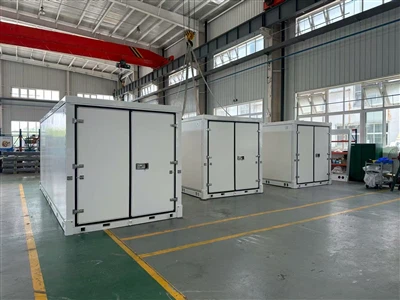
FRP (Fiber Reinforced Plastic) sandwich panels are widely used across transportation, construction, logistics, marine, and industrial applications due to their high strength-to-weight ratio, corrosion resistance, and design flexibility. In these composite structures, overall panel performance does not depend solely on the mechanical properties of the face sheets or the core material. Instead, bond strength at the interfaces-between FRP skins and the core-plays a decisive role in determining structural integrity, durability, and long-term reliability.
Bond failure, such as delamination or core-skin separation, is one of the most common and critical failure modes in sandwich panels. Even when high-quality materials are used, insufficient bonding can lead to premature structural degradation, loss of stiffness, reduced load-bearing capacity, and safety risks. As a result, understanding the key factors that affect bond strength in FRP sandwich panels is essential for designers, engineers, manufacturers, and procurement professionals.
Fundamentals of Bonding in FRP Sandwich Panels
Role of the Bond Line
In an FRP sandwich panel, the bond line serves several critical functions:
Transfers shear stresses between face sheets and core
Maintains panel geometry and thickness
Prevents relative movement between layers
Ensures uniform load distribution
A well-designed bond line allows the FRP skins to efficiently carry tensile and compressive loads while the core resists shear forces. Any weakness in the bond compromises this load-sharing mechanism.
Common Bond Failure Modes
Understanding failure modes helps identify root causes of poor bond strength:
Adhesive failure: Separation at the adhesive–substrate interface
Cohesive failure: Failure within the adhesive layer itself
Substrate failure: Fracture of the FRP skin or core material
Among these, adhesive and interfacial failures are most directly related to bonding parameters and process control.
FRP Face Sheet Characteristics and Their Impact on Bond Strength
Fiber Type and Reinforcement Architecture
The fiber reinforcement in FRP skins significantly influences bonding behavior.
Common fiber types include:
Glass fiber
Carbon fiber
Basalt fiber
Key influencing factors:
Fiber surface chemistry
Fiber orientation
Fabric architecture (woven, stitched, chopped strand mat)
For example, woven fabrics with high resin content near the surface often provide better adhesive wetting than tightly packed unidirectional laminates.
Resin System Selection
The resin matrix in FRP face sheets plays a major role in bond compatibility.
Common resin systems:
Polyester resin
Vinyl ester resin
Epoxy resin
Resin-related factors affecting bond strength include:
Surface energy
Chemical compatibility with adhesive
Degree of cure
Presence of residual styrene or unreacted monomers
Epoxy-based FRP skins generally offer superior bonding performance due to higher surface polarity and better chemical affinity with structural adhesives.
Surface Roughness and Topography
Surface roughness directly affects mechanical interlocking between the adhesive and FRP skin.
Smooth surfaces may limit adhesion
Excessively rough surfaces can trap air or reduce effective contact area
Controlled surface roughening-through sanding, peel-ply, or surface texturing-often improves bond strength by increasing surface area and promoting mechanical anchoring.
Core Material Properties and Their Influence on Bonding
Core Material Type
Different core materials interact differently with FRP skins:
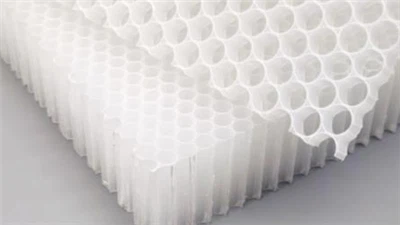
PP honeycomb cores
Foam cores (PVC, PET, PU)
Aluminum honeycomb cores
Paper honeycomb cores
Each core material presents unique challenges related to surface energy, porosity, and stiffness.
Surface Energy and Wettability of the Core
Low surface energy materials, such as polypropylene, can limit adhesive wetting and reduce bond strength unless properly treated.
Key considerations:
Adhesive selection
Surface treatment methods
Primer usage
Improving wettability is often essential to achieve reliable bonding with thermoplastic cores.
Core Surface Geometry and Cell Structure
Honeycomb and cellular cores introduce geometric complexity at the bond interface.
Factors include:
Cell size and wall thickness
Open vs. closed cell design
Core surface flatness
Uneven core surfaces can lead to localized stress concentrations and incomplete adhesive contact, weakening the bond.
A Central Determinant of Bond Strength
Adhesive Type and Chemistry
The adhesive system must be compatible with both FRP skins and the core.
Common adhesive types:
Epoxy adhesives
Polyurethane adhesives
Acrylic adhesives
Each adhesive offers different balances of:
Shear strength
Peel resistance
Toughness
Cure speed
Epoxy adhesives are often preferred for high structural performance, while polyurethane adhesives offer improved flexibility and impact resistance.
Adhesive Viscosity and Flow Behavior
Adhesive viscosity influences:
Penetration into surface irregularities
Ability to wet fibers and core surfaces
Void formation risk
Too low viscosity may cause excessive flow and bond-line thinning, while too high viscosity may prevent proper wetting.
Adhesive Thickness Control
Bond-line thickness is a critical but often overlooked parameter.
Too thin: risk of brittle failure
Too thick: reduced shear strength and increased creep
Controlled adhesive thickness ensures optimal stress distribution and consistent bond performance.
Surface Preparation Methods and Their Effectiveness
Mechanical Surface Preparation
Common methods include:
Sanding
Grinding
Abrasion blasting
These techniques:
Remove surface contaminants
Increase surface roughness
Improve mechanical interlocking
However, excessive abrasion can damage fibers or weaken the FRP laminate.
Chemical Surface Treatment
Chemical treatments may involve:
Solvent cleaning
Acid etching
Surface activation agents
These processes improve surface cleanliness and chemical bonding potential.
Plasma and Corona Treatment
Advanced surface activation techniques include:
Plasma treatment
Corona discharge treatment
These methods:
Increase surface energy
Introduce polar functional groups
Improve adhesive wetting without mechanical damage
They are particularly effective for low-energy core materials such as PP honeycomb.
Manufacturing Process Parameters
Lamination and Bonding Pressure
Adequate pressure during bonding ensures:
Full adhesive contact
Elimination of air voids
Uniform bond-line thickness
Insufficient pressure can result in weak or discontinuous bonds.
Temperature and Cure Conditions
Adhesive curing is highly sensitive to:
Temperature
Time
Heating rate
Inadequate cure conditions can lead to:
Reduced cohesive strength
Poor long-term durability
Increased creep
Controlled curing schedules are essential for consistent bond performance.
Assembly Timing and Open Time
Adhesive open time determines:
Assembly window
Flow behavior
Final bond quality
Exceeding open time can result in skinning or partial curing before assembly, leading to poor adhesion.
Environmental and Service Conditions
Moisture and Humidity Exposure
Moisture can degrade bond strength through:
Hydrolysis of adhesive
Swelling of core materials
Interfacial weakening
Adhesive systems must be selected and tested for moisture resistance under realistic service conditions.
Temperature Cycling and Thermal Expansion
Different materials exhibit different coefficients of thermal expansion.
Thermal mismatch can induce:
Interfacial stresses
Microcracking
Progressive delamination
Flexible or toughened adhesives can mitigate these effects.
Chemical Exposure and UV Aging
Exposure to:
Oils
Fuels
Cleaning chemicals
UV radiation
can degrade adhesives and weaken bonds over time. Protective coatings and appropriate adhesive selection are critical in harsh environments.
Mechanical Loading and Fatigue Effects
Static Load Performance
Bond strength must support:
Bending loads
Shear forces
Localized point loads
Static testing helps validate initial bond integrity.
Fatigue and Cyclic Loading
Repeated loading can cause:
Progressive bond degradation
Crack initiation at interfaces
Reduced service life
Fatigue-resistant adhesives and robust surface preparation improve long-term durability.
Quality Control and Testing Methods
Destructive Testing
Common methods include:
Flatwise tensile test
Shear test
Peel test
These tests quantify bond strength and identify failure modes.
Non-Destructive Inspection
Techniques include:
Ultrasonic testing
Tap testing
Infrared thermography
Non-destructive methods allow in-process and in-service bond evaluation.
Design Considerations for Improving Bond Strength
Stress Distribution and Joint Design
Proper panel design minimizes stress concentrations at bond lines through:
Gradual thickness transitions
Adequate edge reinforcement
Avoidance of sharp geometry changes
Redundancy and Safety Margins
Designing with conservative safety factors ensures performance even under unforeseen conditions.
Common Causes of Bond Failure in Practice
Typical causes include:
Inadequate surface preparation
Incorrect adhesive selection
Poor process control
Environmental exposure beyond design limits
Identifying these root causes enables continuous improvement.
Industry Best Practices for Reliable Bonding
Best practices include:
Standardized surface preparation procedures
Process documentation and operator training
Controlled environmental conditions during bonding
Regular testing and validation
Achieving Reliable Bond Strength in FRP Sandwich Panels
Bond strength is the backbone of FRP sandwich panel performance. It governs load transfer, structural stability, durability, and safety throughout the panel's service life. Achieving strong, reliable bonding requires a holistic approach that considers material compatibility, surface preparation, adhesive chemistry, process control, and environmental exposure.
By understanding and managing the key factors outlined in this article-ranging from FRP face sheet properties and core material characteristics to adhesive selection and manufacturing discipline-engineers and manufacturers can significantly reduce the risk of bond failure and deliver high-performance sandwich panels that meet demanding industry requirements.
In modern composite design, bond strength is not an afterthought; it is a critical engineering parameter that must be addressed from concept through production and service life.