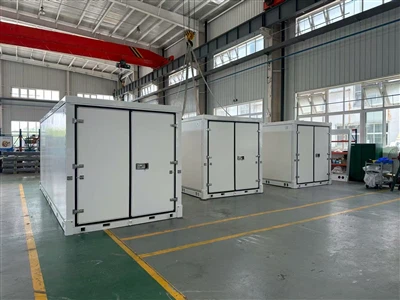
Lightweight engineering has become a cornerstone of modern design across transportation, logistics, electric vehicles, specialty truck bodies, and high-performance structural equipment. The core goal is clear: maintain or improve structural strength, safety, and durability while minimizing overall weight. For OEMs, fleet operators, and design engineers, honeycomb panels-especially those developed by Holycore-have emerged as a foundational material in achieving this balance.
Holycore's product range, including Thermoplastic Fiberglass Sandwich Panels, PP Honeycomb Core, FRP Sandwich Panels, Decorative Panels, and Fiberglass Sheets, is purpose-built for lightweight engineering. Unlike panels using paper or metal honeycomb cores, Holycore relies exclusively on polypropylene (PP) honeycomb, delivering consistent lightweight performance without compromising structural integrity. This article explains the mechanical and material science principles that make honeycomb panels essential to modern lightweight engineering.

1. Maximizing Strength-to-Weight Ratio Through Structural Efficiency
The defining advantage of honeycomb panels in lightweight engineering is their exceptional strength-to-weight ratio. Traditional materials like plywood, steel, aluminum, and solid plastics require significant mass to achieve adequate rigidity. Honeycomb structures achieve superior strength through geometry, not excess material.
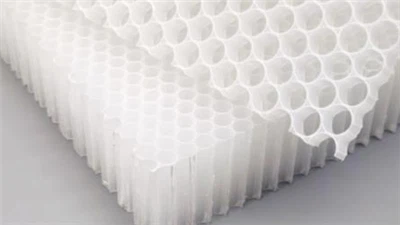
The hexagonal cellular structure of PP honeycomb creates an ultra-efficient load-bearing network using minimal material.
When combined with high-strength thermoplastic fiberglass or FRP face sheets, the sandwich panel acts as a unified beam, resisting bending, compression, and impact.
Holycore panels achieve equivalent or higher structural performance than plywood or metal panels at 40–70% less weight.
This efficiency allows engineers to reduce component mass without sacrificing safety or load capacity-an essential principle in lightweight design.
2. Removing Unnecessary Mass With Cellular Core Design
Solid materials distribute material evenly throughout a panel, resulting in heavy sections with underutilized strength. Honeycomb panels invert this logic by removing mass from low-stress areas and concentrating material in the cell walls, where it actively contributes to strength.
PP honeycomb core consists mostly of air inside closed cells, resulting in very low density.
The core maintains vertical compression strength and lateral load distribution without adding unnecessary weight.
Thinner, high-performance fiberglass skins replace thick, heavy solid plates.
By design, honeycomb panels are structurally efficient, not material-heavy, making them ideal for weight-sensitive applications such as truck bodies, trailer walls, van flooring, and electric vehicle components.
3. Enabling Down-Gauging and System-Level Weight Reduction
In lightweight engineering, reducing weight in one component often allows cascading weight savings across the entire system. Lighter body panels reduce load on the chassis, suspension, brakes, and powertrain, enabling engineers to specify lighter supporting components.
Lighter Holycore panels reduce the overall weight of truck and trailer bodies by 500–1000 kg.
This allows for smaller, lighter suspension and braking systems.
For electric logistics vehicles, lower chassis weight reduces battery load and extends driving range.
This system-level lightweighting effect significantly improves fuel efficiency, payload capacity, and vehicle performance.
4. Supporting Lightweight Design in High-Impact and High-Load Environments
A major challenge in lightweight engineering is maintaining durability under impact, fatigue, and heavy loading. Many lightweight materials (thin plastics, foam boards, plywood) sacrifice strength to reduce weight. Honeycomb panels avoid this tradeoff.
PP honeycomb absorbs impact energy through controlled cell deformation, protecting structures without adding mass.
Continuous fiberglass skins provide puncture and tear resistance at a fraction of the weight of steel.
The sandwich structure distributes point loads from cargo, forklifts, and road impacts across a wide area, maintaining performance at reduced weight.
Holycore's panels prove that lightweight engineering does not require compromising durability-a critical factor in logistics and transport.
5. Facilitating Long Spans Without Added Weight
Lightweight engineering often demands rigid, flat panels over long spans to reduce support structures and simplify assembly. Traditional materials sag or require heavy reinforcement frames.
The honeycomb sandwich structure increases the moment of inertia, providing high flexural stiffness.
Long, unsupported panel sections remain straight and stable without heavy substructures.
Reduced frame requirements further lower overall vehicle or equipment weight.
This benefit is widely used in trailer roofs, side panels, truck walls, and container linings where lightweight and rigidity are equally important.
6. Compatibility With High-Performance Lightweight Skin Materials
Holycore enhances lightweight engineering by pairing PP honeycomb cores with advanced lightweight face sheets:
Thermoplastic fiberglass offers elastic strength, impact resistance, and low density.
FRP (fiberglass reinforced polymer) provides high rigidity and durability without heavy steel or aluminum layers.
These skins are thin, strong, and corrosion-resistant, replacing heavier metal or wood panels.
The synergy between lightweight cores and high-performance skins creates a panel system engineered specifically for modern lightweight design principles.
7. Improving Energy Efficiency Through Weight Reduction
In transport and logistics, lightweight engineering directly translates to energy efficiency-one of the industry's most urgent goals.
Lighter vehicles consume less fuel for diesel and gasoline fleets.
For electric delivery vans and trucks, lower weight extends battery range and reduces charging costs.
Reduced weight lowers wear on tires, brakes, and drivetrains, further improving operational efficiency.
Holycore honeycomb panels help OEMs meet emissions targets and fleet operators reduce operational costs.
8. Maintaining Environmental Stability Without Weight Penalty
Many lightweight materials degrade in harsh environments: plywood absorbs water and becomes heavy, foam breaks down, aluminum corrodes, and paper honeycomb swells and loses strength.
Holycore's PP honeycomb is waterproof, chemical-resistant, and non-corrosive.
It maintains consistent lightweight performance even in humid, cold-chain, or coastal environments.
No need for heavy protective coatings or sealants that add weight over time.
This stability ensures lightweight performance remains consistent throughout the panel's service life.
Conclusion
Honeycomb panels support lightweight engineering by delivering maximum structural efficiency with minimal material mass. Through optimized cellular geometry, high-strength lightweight skins, and system-level design advantages, they allow engineers to build stronger, safer, and more durable equipment while significantly reducing weight.
For transportation, logistics, and electric vehicle applications, Holycore's PP honeycomb composite panels represent the gold standard in lightweight engineering-proving that weight reduction and performance can coexist without compromise.