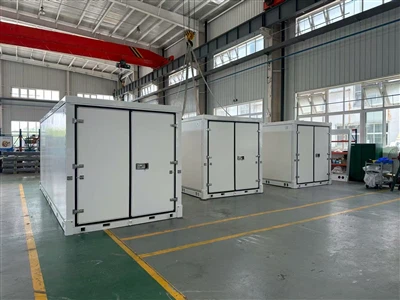
Introduction: Why Engineers Continue to Specify Fiberglass Sheets
Material selection directly affects equipment weight, corrosion resistance, maintenance intervals, and manufacturing cost. In truck body production, modular construction, wastewater treatment facilities, and industrial equipment enclosures, engineers often compare fiberglass sheets with steel sheets, aluminum sheets, and plywood panels before finalizing a design.
Unlike metal sheets that rely entirely on material thickness to resist loads, fiberglass sheets combine glass fiber reinforcement with a resin matrix to create a composite structure. This construction allows designers to control thickness, weight, corrosion resistance, and surface finish according to project requirements. Understanding how fiberglass sheets are built and where they are used helps procurement teams evaluate whether a solid composite sheet or a sandwich panel structure is more suitable for a specific application.

What Is a Fiberglass Sheet?
A fiberglass sheet is a composite panel manufactured by combining glass fiber reinforcement with a thermosetting resin system. The basic structure consists of:
Glass fibers carry tensile loads and distribute stresses throughout the panel. The resin binds the fibers together, transfers loads between fiber layers, and protects the reinforcement from moisture and chemical exposure. Typical thickness ranges from 1 mm to 10 mm.
How Fiberglass Sheets Work Under Load
Fiberglass sheets resist bending by transferring forces through interconnected layers of glass reinforcement. When a panel experiences loading:
Unlike sheet metal, which may dent and permanently deform under localized impact, fiberglass laminates distribute force through multiple fiber layers. Woven roving layers improve load distribution in truck sidewall panels, while chopped strand mat layers support multidirectional stress transfer in covers.
How Fiberglass Sheets Are Manufactured
Continuous Lamination
Glass fibers are continuously fed into a resin system and cured into flat sheets. Commonly used for trailer wall skins, roof skins, and building panel facings. Allows panel lengths exceeding 10 m.
Compression Molding
Resin-impregnated fiberglass layers are compressed under pressure and temperature conditions. This process systematically improves thickness control and surface consistency for complex industrial panels.
Hand Lay-Up
Glass reinforcement is manually positioned and saturated with liquid resin systems. This method is primarily used for low-volume production schemes and custom layout sheet geometries.
Why Fiberglass Sheets Are Replacing Metal Panels
Steel sheets provide high strength but require corrosion protection, while aluminum sheets reduce weight but increase cost. Fiberglass sheets solve distinct parameters:
| Property | Fiberglass Sheet | Steel Sheet |
|---|---|---|
| Density | Lower composite density due to resin-fiber structure | Higher metal density |
| Corrosion behavior | Resin barrier prevents electrochemical corrosion | Requires coating in humid environments |
| Electrical behavior | Non-conductive structure | Conductive |
| Maintenance cycle | No rust removal required | Surface treatment required |
In wastewater treatment covers, fiberglass sheets remain stable under continuous humidity exposure, where steel panels require repeated coating maintenance due to oxidation.
Common Applications of Fiberglass Sheets
Structural Evolution: When a Fiberglass Sheet Is Not Enough
A solid fiberglass sheet performs effectively as a skin material. However, increasing sheet thickness is not always the most economical way to improve panel stiffness. As panel dimensions increase, solid laminates become significantly heavier. For example, a 3 m wall panel subjected to wind load requires stiffness values beyond thin laminates.
How Fiberglass Sheets Become FRP Sandwich Panels
An FRP sandwich panel scales efficiency by combining three layers:
The outer layers resist tension/compression, while the low-density core transfers shear loads. This configuration increases panel thickness metrics without filling the layout volume with expensive solid material. Common selections include PP honeycomb core, PET foam, and PU foam blocks.
Why PP Honeycomb Is Frequently Paired: Consisting of thermally bonded polypropylene sheets expanded into hexagonal cells (thickness 6–100 mm, density 60–120 kg/m³), the core transfers shear forces through cell walls. This reduces material consumption by creating optimized internal voids throughout large-span enclosures.
Key Specifications Buyers Evaluate
Monitored Failure Mechanisms
How HolyCore Supports Composite Panel Manufacturers
HolyCore supplies high-grade fiberglass sheets and matching PP honeycomb core materials engineered explicitly for industrial and transport sandwich panel lamination lines. Integrated support options:
Skin Customization
Tailored fiberglass sheet thickness alongside specialized industrial gel coat finishes.
Core Optimization
PP honeycomb core thickness configuration scaling cleanly from 6 mm to 100 mm formats.
Integrated Processing
Bespoke CNC sheet cutting, allowing core and skin layers to match weight and stiffness requirements.
Conclusion
Fiberglass sheets are composite laminates formed by combining glass fiber reinforcement with resin systems. They are commonly used in truck bodies, modular buildings, equipment enclosures, refrigerated vehicles, and wastewater treatment facilities where corrosion resistance and controlled weight are important design considerations. For projects requiring larger spans or increased stiffness, fiberglass sheets can be integrated with PP honeycomb cores to create sandwich panels that transfer loads through a multi-layer composite structure. HolyCore supports this process by supplying both fiberglass sheet materials and honeycomb core solutions tailored to transportation and industrial manufacturing requirements.