Introduction: Why Manufacturers Use Sandwich Panel Structures
In transportation equipment, modular buildings, refrigerated vehicles, and industrial enclosures, panel thickness often needs to increase to improve stiffness. Traditional solid panels achieve this by adding more material, which increases weight and transportation costs.
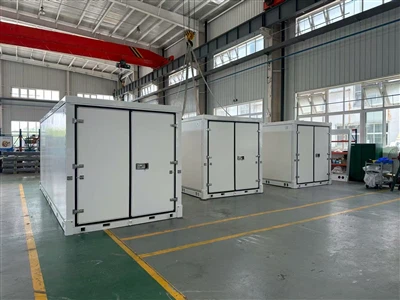
FRP sandwich panels solve this problem through a layered structure. Instead of using a solid core, they combine fiberglass-reinforced skins with a lightweight core material. This construction allows manufacturers to maintain panel thickness while reducing material mass. As a result, FRP sandwich panels are commonly integrated into truck body walls, RV side panels, cleanroom partitions, and prefabricated building systems.

What Is an FRP Sandwich Panel?
An FRP sandwich panel is a composite structure consisting of three primary layers:
- Outer FRP skin
- Core material
- Inner FRP skin
Typical skin materials are manufactured from fiberglass reinforcement and thermosetting resin systems such as polyester, vinyl ester, or epoxy resin.
A Simplified Structure
The FRP skins resist tensile and compressive forces, while the core supports panel thickness and transfers loads between the skins. This configuration allows the panel to carry bending loads without requiring a solid internal structure.
How Does an FRP Sandwich Panel Work?
When a sandwich panel is subjected to bending forces, different layers perform different mechanical functions.
As the distance between skins increases, the panel's moment of inertia increases. This allows the structure to resist bending with less material compared to a solid panel of equivalent thickness. For example, a 40 mm sandwich panel may achieve greater bending stiffness than a much thinner solid laminate while using significantly less material in the panel center.
Main Components of an FRP Sandwich Panel
FRP Face Sheets
FRP skins are produced from fiberglass reinforcement combined with resin systems. Skin thickness typically ranges from 0.8 mm to 5 mm depending on load requirements.
Reinforcement Materials:
- Chopped strand mat
- Woven roving
- Multiaxial fiberglass fabric
Resin Systems:
- Polyester resin
- Vinyl ester resin
- Epoxy resin
Core Material
The core occupies most of the panel thickness and determines weight, shear strength, and thermal performance.
| Core Material | Typical Density |
|---|---|
| PP Honeycomb Core | 60–120 kg/m³ |
| PET Foam | 80–200 kg/m³ |
| PU Foam | 30–150 kg/m³ |
| Plywood | 400–700 kg/m³ |
| Aluminum Honeycomb | Depends on foil thickness |
Why PP Honeycomb Core Is Frequently Used
PP honeycomb core is manufactured from polypropylene sheets that are bonded and expanded into a continuous hexagonal cellular structure. Compared with solid-core structures, the cellular geometry reduces material usage because much of the internal volume consists of enclosed air spaces.
Commonly Integrated Into:
Step-by-Step Manufacturing Process
FRP Skin Production
Fiberglass reinforcement is combined with resin and formed into sheets using Hand lay-up, Continuous lamination, Vacuum infusion, or Compression molding.
Core Material Preparation
The selected core material is precisely processed via CNC cutting, edge trimming, surface cleaning, and thickness verification to ensure uniform load transfer.
Adhesive Application
Polyurethane, epoxy, or modified acrylic adhesive is applied. Complete coverage is vital to prevent structural bond failure and local stress concentrations.
Panel Assembly
Layers are stacked in precise sequence: FRP Skin → Adhesive → PP Honeycomb Core → Adhesive → FRP Skin. All layers remain adjustable prior to pressing.
Pressing and Lamination
Vacuum presses, hydraulic presses, or continuous laminating lines apply even pressure to force the components into a uniform, robust structural bond.
Curing Process
The entire resin and adhesive matrix is cured under strict ambient, heated press, or oven-assisted specifications to secure final engineering performance.
Cutting and Finishing
Post-cure operations shape the panel into final client deliverables via CNC routing, edge trimming, hardware cutouts, surface inspections, and structural edge sealing.
Common Applications
Transportation
Truck body side walls, trailer roof panels, RV wall systems, and cargo partitions. Maximizes payload capability by significantly saving tare weight.
Modular Construction
Prefabricated wall systems, portable structures, and modular houses. Drastically lowers site installation loads while keeping high structural thickness.
Cleanroom Systems
Pharmaceutical plants, electronics manufacturing facilities, and lab partitions. Ultra-smooth hygienic FRP surfaces support intense sanitization protocols.
Marine Interiors
Cabin partitions, interior walling, and vessel furniture. PP honeycomb cores are immune to corrosion or rot in highly humid maritime settings.
Key Evaluation Factors for Buyers
- Core Thickness: Range between 10 to 100 mm
- Core Density: Standard PP honeycomb at 60–120 kg/m³
- Skin Thickness: Typically ranges between 0.8–5 mm
- Shear Strength: Defines real load transfer inside the component
- Compressive Strength: Crucial for heavy flooring or point loads
- Adhesive Compatibility: Must chemically pair with skins and core
- Service Environment: Analyze temp limits, humidity, vibration, and impact
Failure Modes and Prevention
Delamination
Cause: Adhesive bond fails between face sheet and core.
Prevention: Strictly manage total glue coverage and cure profile variables.
Core Crushing
Cause: Local point weights overwhelm basic core compression limits.
Prevention: Select higher core density or design localized internal framing.
Edge Damage
Cause: Exposed raw core edges get structural impact fatigue.
Prevention: Frame out with dedicated edge extrusions and protective seals.