Why Vehicle Manufacturers Are Replacing Traditional Metal Structures With Composite Panels
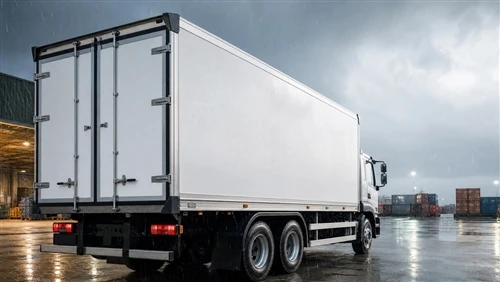
Truck bodies, mobile units, refrigerated vehicles, and special-purpose transport systems increasingly use lightweight structural panels instead of traditional steel sheet assemblies. The change is mainly driven by payload limitations, fuel consumption control, corrosion resistance requirements, and thermal insulation integration.
Traditional welded steel structures add mass to the vehicle body and require multiple secondary operations including:Welding,Rust-proof coating,Internal insulation filling,Riveting or reinforcement framing.
Composite sandwich panels reduce these operations by integrating structural support and skin layers into a single laminated panel system.Holycore manufactures lightweight structural panels using honeycomb core technology for vehicle body systems, mobile units, and modular transportation structures.

What Is a Lightweight Structural Panel?
A lightweight structural panel is a sandwich composite panel consisting of:
| Layer | Material | Function |
|---|---|---|
| Surface Skin | FRP / Aluminum / Steel Sheet | Transfer surface load and resist impact |
| Core Layer | PP Honeycomb | Reduce weight and support panel stiffness |
| Adhesive Interface | PU / Epoxy Bonding System | Transfer shear stress between layers |
The panel functions as a load-distribution structure rather than a solid monolithic board.
When external force acts on the panel surface:
- The outer skin absorbs tensile and compressive stress
- The honeycomb core separates the skins and resists shear deformation
- The bonded structure distributes force across the panel area
This allows the panel to maintain bending stiffness while reducing overall weight.
Production Control Parameters
| Process | Controlled Factor |
|---|---|
| Core Preparation | Cell uniformity |
| Lamination | Bonding pressure |
| Adhesive Application | Glue distribution |
| Thermal Curing | Temperature cycle |
| CNC Processing | Dimensional tolerance |
Improper bonding may generate:
- Skin delamination
- Edge separation
- Localized panel buckling
- Reduced shear strength
Holycore controls lamination flatness and adhesive distribution to maintain bonding consistency across large-format vehicle panels.
Common Panel Structures Used by Holycore
Holycore configures different laminated structures according to vehicle application environments.
FRP + PP Honeycomb + FRP
Commonly used for:
- Refrigerated truck bodies
- Mobile medical units
- RV sidewalls
- Dry freight vehicle panels
Structural characteristics:
- Corrosion-resistant surface
- Smooth cleanable skin
- Reduced thermal conductivity
- Impact-resistant laminated structure
Aluminum + Honeycomb + Aluminum
Commonly used for:
- Logistics truck bodies
- Lightweight transport vehicles
- Equipment enclosures
Structural characteristics:
- Lower total vehicle weight
- Metallic surface rigidity
- Riveted or bonded assembly compatibility
Steel Skin Composite Panels
Used where higher localized impact resistance is required, including:
- Industrial cargo bodies
- Heavy-duty transport systems
- Mobile workshop containers
Engineered for heavy load profiles and rugged deployment areas requiring extreme mechanical stability.
Why Vehicle Manufacturers Work With Holycore
Core Focus:Holycore focuses on composite honeycomb panel manufacturing for transportation and mobile structure applications rather than general decorative panel production.
Engineering Support
Technical analysis & customized configurations:
- ▪ Panel structure configuration
- ▪ Core thickness selection
- ▪ Skin material matching
- ▪ Edge sealing recommendations
- ▪ Vehicle application analysis
- ▪ OEM dimensional processing
Project-Based Manufacturing
Scalable supply chain capabilities:
- ▪ Large-format panel production
- ▪ Custom laminated structures
- ▪ CNC machining preparation
- ▪ Containerized export packaging
- ▪ Batch consistency control