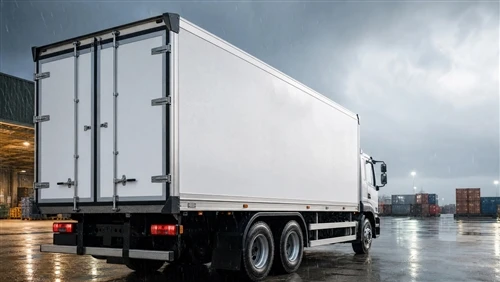
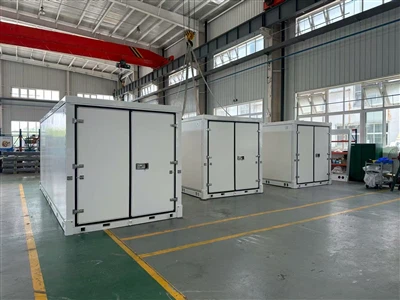
Material Selection As A Structural And Economic Decision
In modern truck body engineering, material selection is no longer a purely structural question. It directly influences vehicle payload efficiency, thermal performance, durability, lifecycle cost, and compliance with increasingly stringent transport regulations. Among the available construction solutions, FRP sandwich panels and aluminum panels have emerged as two dominant yet fundamentally different material systems.
Aluminum panels represent a metallic, monolithic approach, traditionally associated with strength, recyclability, and established manufacturing familiarity. FRP (Fiber Reinforced Plastic) sandwich panels, by contrast, are composite systems, integrating high-performance skins with lightweight core materials to deliver optimized stiffness-to-weight ratios and multifunctional performance.
This article provides a deep technical comparison between FRP sandwich panels and aluminum panels in truck body design, examining structural behavior, thermal efficiency, durability, manufacturing implications, cost dynamics, and application suitability. The objective is not to declare a universal winner, but to clarify where and why each solution performs best in real-world commercial vehicle applications.
Overview of FRP Sandwich Panels
Structural Composition
An FRP sandwich panel typically consists of three primary layers:
Outer skins: Glass fiber reinforced plastic (GFRP), carbon fiber reinforced plastic (CFRP), or hybrid laminates
Core material: PP honeycomb, PET foam, PU foam, XPS foam, or PVC foam
Adhesive interface: Structural bonding systems ensuring shear transfer between skins and core
This configuration creates a sandwich structure, where the skins resist bending stresses and the core stabilizes the skins while absorbing shear forces.
Mechanical Characteristics
Key mechanical attributes of FRP sandwich panels include:
High bending stiffness at low mass
Excellent fatigue resistance under cyclic loading
Low susceptibility to denting compared with thin metal sheets
Anisotropic strength that can be engineered through fiber orientation
The separation of skins by a lightweight core significantly increases the second moment of area, enabling high stiffness without proportional weight gain.
Functional Integration
Beyond load-bearing performance, FRP sandwich panels can integrate:
Thermal insulation
Acoustic damping
Moisture barriers
Chemical resistance
This multifunctionality makes them particularly attractive for refrigerated trucks, dry freight bodies, and specialized transport vehicles.
Overview of Aluminum Panels in Truck Bodies
Material Forms and Grades
Aluminum truck panels are typically manufactured from:
3000-series aluminum alloys (corrosion resistance)
5000-series alloys (strength and formability)
Extruded aluminum profiles combined with flat sheets
Panels may be used as solid sheets, rib-reinforced structures, or modular extrusions assembled into sidewalls and roofs.
Mechanical Behavior
Aluminum panels offer:
Isotropic material properties
Predictable elastic-plastic deformation
Good impact tolerance at moderate thickness
High thermal conductivity
However, to achieve sufficient stiffness, aluminum panels often require greater thickness or additional reinforcements, increasing overall weight.
Industry Familiarity
Aluminum benefits from:
Mature global supply chains
Established welding and fastening techniques
High scrap value and recyclability
These factors contribute to its continued use in general cargo trucks, flatbeds, and utility vehicle bodies.
Structural Performance Comparison
Bending Stiffness and Load Distribution
FRP sandwich panels excel in bending stiffness per unit weight due to their structural geometry. By positioning strong skins far apart, they resist deflection more efficiently than monolithic aluminum sheets of comparable mass.
Aluminum panels rely primarily on material thickness and added ribs to increase stiffness. This approach often leads to:
Local stress concentrations
Increased structural weight
More complex joint design
For large-span sidewalls and roofs, FRP sandwich panels typically achieve higher stiffness with lower mass.
Fatigue Resistance
Truck bodies experience continuous vibration and cyclic loading from road conditions. Fatigue performance is therefore critical.
FRP composites exhibit excellent fatigue resistance due to crack-arresting fiber structures
Aluminum is prone to fatigue crack initiation, especially at welds and fastener holes
In high-mileage logistics fleets, fatigue-related maintenance can significantly impact lifecycle costs, favoring composite solutions.
Weight Efficiency and Payload Optimization
Impact on Vehicle Payload
Weight reduction directly increases payload capacity or allows compliance with gross vehicle weight regulations.
FRP sandwich panels can reduce body weight by 20–40% compared to reinforced aluminum structures
Aluminum panels are lighter than steel but heavier than optimized composite panels
For refrigerated and long-haul logistics, weight savings translate into:
Higher cargo volume utilization
Lower fuel consumption
Reduced axle load stress
Center of Gravity Considerations
Lighter sidewalls and roofs lower the vehicle's center of gravity, improving:
Driving stability
Rollover resistance
Handling performance
FRP sandwich panels offer clear advantages in tall box bodies and multi-temperature compartments.
Thermal and Insulation Performance
Thermal Conductivity
Aluminum has high thermal conductivity, which is disadvantageous in applications requiring thermal control.
FRP sandwich panels, by contrast:
Utilize low-conductivity cores
Minimize thermal bridges
Provide consistent insulation across panel surfaces
Refrigerated Transport Implications
In refrigerated truck bodies:
Aluminum panels require additional insulation layers
Thermal bridging at joints increases energy consumption
Condensation risk is higher
FRP sandwich panels integrate insulation directly into the structure, improving:
Temperature stability
Refrigeration efficiency
Compliance with cold-chain standards
Durability and Environmental Resistance
Corrosion Behavior
Aluminum forms a protective oxide layer but remains vulnerable to:
Galvanic corrosion
Chemical attack from road salts and cargo residues
Crevice corrosion at joints
FRP sandwich panels are inherently corrosion-resistant and unaffected by moisture, salts, or most chemicals, making them suitable for:
Coastal regions
Food and pharmaceutical transport
Chemical logistics
Impact and Surface Damage
Aluminum panels dent easily under localized impact, often requiring panel replacement for aesthetic or functional reasons.
FRP panels:
Distribute impact energy across fibers
Are less prone to permanent deformation
Can be locally repaired without full panel replacement
Manufacturing and Assembly Considerations
Production Processes
Aluminum panel fabrication typically involves:
Cutting
Bending
Welding or riveting
Surface treatment
FRP sandwich panel manufacturing involves:
Lamination or pultrusion of skins
Core bonding
Controlled curing processes
While composite manufacturing requires more process control, it enables high dimensional accuracy and repeatability for modular truck bodies.
Assembly Efficiency
FRP panels allow:
Large-format panels with fewer joints
Adhesive bonding instead of mechanical fasteners
Reduced assembly time
Aluminum bodies often require complex framing systems, increasing labor intensity.
Repairability and Maintenance
Field Repair Scenarios
Aluminum repairs often require:
Specialized welding equipment
Skilled labor
Body disassembly
FRP sandwich panels can be repaired using:
Patch lamination
Resin injection
Local surface refinishing
This makes composites particularly attractive for fleets operating in remote regions.
Long-Term Maintenance Costs
Although aluminum panels may have lower initial material costs, maintenance and downtime expenses can outweigh the upfront savings over the vehicle's lifecycle.
Lifecycle Cost Analysis
Initial Cost vs Total Cost of Ownership
Aluminum panels generally offer lower upfront cost per square meter. FRP sandwich panels involve higher material and processing costs.
However, when evaluated across:
Fuel savings
Maintenance frequency
Repair downtime
Service life
FRP sandwich panels often demonstrate lower total cost of ownership, particularly in high-utilization fleets.
Service Life Expectations
Composite truck bodies commonly achieve service lives exceeding 15–20 years, while aluminum bodies may require partial replacement or reinforcement sooner under harsh operating conditions.
Sustainability and Environmental Considerations
Material Efficiency
FRP sandwich panels achieve higher performance with less raw material mass. However, recyclability remains a challenge, depending on resin systems and core materials.
Aluminum is highly recyclable with established infrastructure, contributing positively to circular economy goals.
Operational Sustainability
Reduced vehicle weight and improved thermal efficiency result in lower fuel or energy consumption, indirectly reducing carbon emissions over the vehicle's operational life.
Application-Specific Recommendations
Best Applications for FRP Sandwich Panels
Refrigerated trucks
Dry freight box bodies
High-mileage logistics fleets
Temperature-sensitive transport
Lightweight urban delivery vehicles
Best Applications for Aluminum Panels
Flatbeds and open bodies
Construction and utility trucks
Short-haul applications with frequent modifications
Cost-sensitive standard cargo vehicles
Engineering-Driven Material Choice
The comparison between FRP sandwich panels and aluminum panels in truck body design is not a matter of superiority, but of engineering alignment with operational requirements.
FRP sandwich panels represent a system-level solution, offering superior weight efficiency, insulation, fatigue resistance, and integrated functionality. Aluminum panels remain a robust, familiar option with strong recyclability and cost advantages in less demanding applications.
For modern logistics, refrigerated transport, and performance-driven fleets, FRP sandwich panels increasingly define the future of truck body construction. Aluminum panels, however, will continue to play a role where simplicity, recyclability, and initial cost remain primary decision drivers.